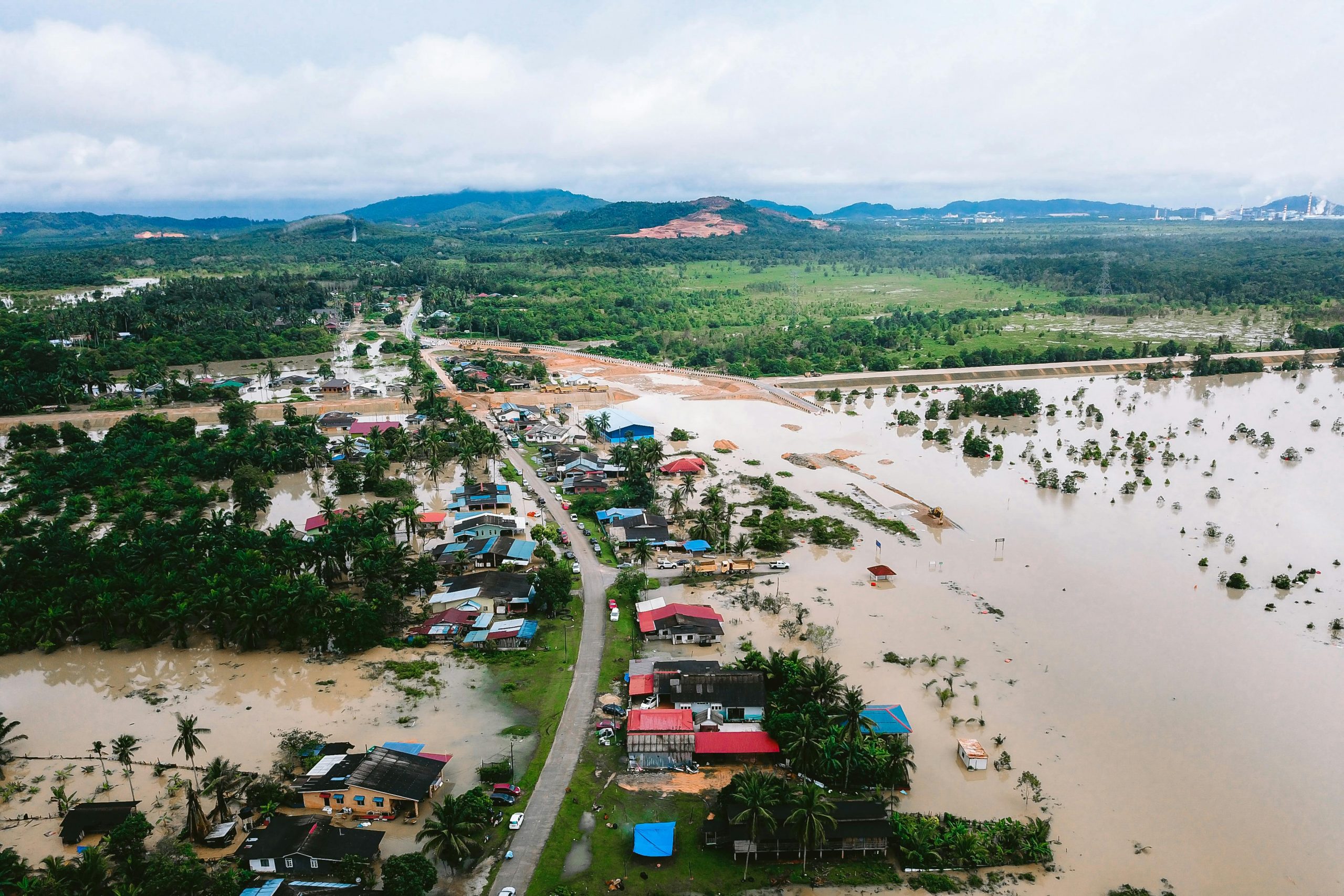

An aerial photo of a flooded village in Malaysia. “Flooded Village and Forest” by Pok Rie is licensed under CC BY 2.0 in pexels.

Scientific experts widely agree that our climate is changing at an unprecedented rate, and that human activity is (at least partially) to blame. Among the general public, the consensus is not quite as high, although across the globe worry about climate impacts is on the rise. A majority of Americans, for example, believe in anthropogenic, or human-caused, climate change, but beliefs are politically polarized and tied up with identity. All of this has important implications for how we communicate about the climate.

A recent study conducted by researchers from The University of Queensland sought to understand how trust functions in climate communications. Using survey data from over 6,000 participants across 13 countries, they examined who respondents trusted regarding climate change, what features made them trustworthy, and most strikingly, how these differed between climate believers and skeptics. 

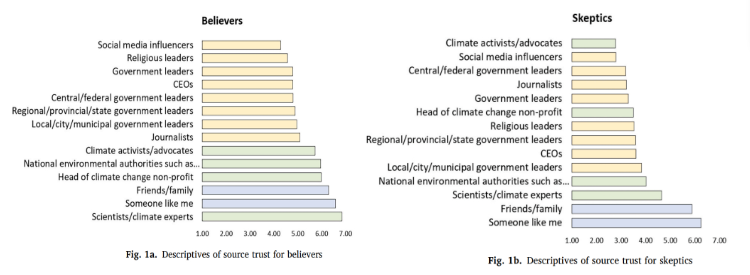
Participants were asked to indicate how much they would trust certain groups of people to tell them the truth about climate change and what should be done about it. The charts below demonstrate that while “scientists/climate experts” were highly trusted among believers, skeptics rated “someone like me” and “friends/family” significantly more trustworthy than scientists.  Among both groups, however, scientists/climate experts were trusted significantly more than government leaders, social media influencers, and religious figures, as well as journalists, activists, and environmental authorities.

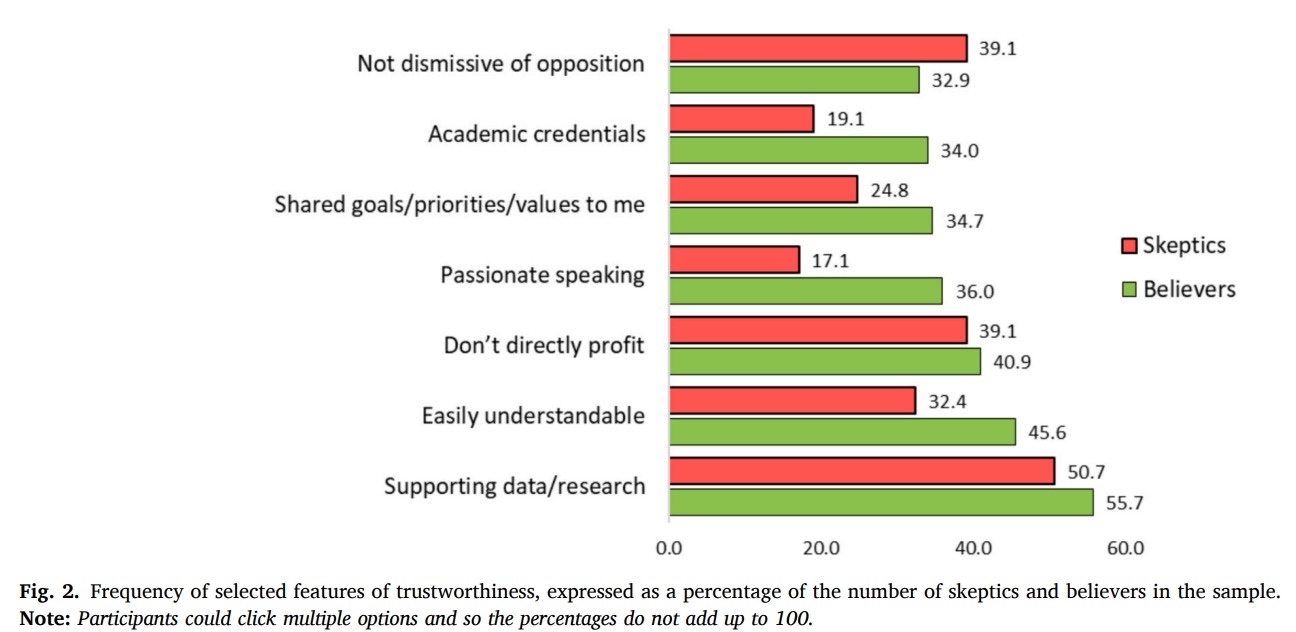
The survey also asked about which features made messengers seem trustworthy. Believers placed the greatest value on having supporting data and communicating in easily understandable ways. In contrast, skeptics were more likely than believers to select “not dismissive of opposition” as a marker of trustworthiness. “Academic credentials” were also less compelling to skeptics, who selected them at 19% compared to the believers’ 34%.

Ultimately, the study signals that trust is not inherent to a particular message or messenger, but that it emerges from an interaction between audience and communicator. With “friends and family” and “people like me” among the most trusted sources overall – especially among climate skeptics – the researchers suggest that policymakers might leverage trusted lay networks, like peers and community leaders, for climate communication. So if you feel strongly about climate change, maybe try talking to your neighbor.

————–

Nicole Bekesz is a first-year PhD student in the Geography, Environment & Society department. She is interested in critical Climate and Environmental Justice, particularly in urban contexts.

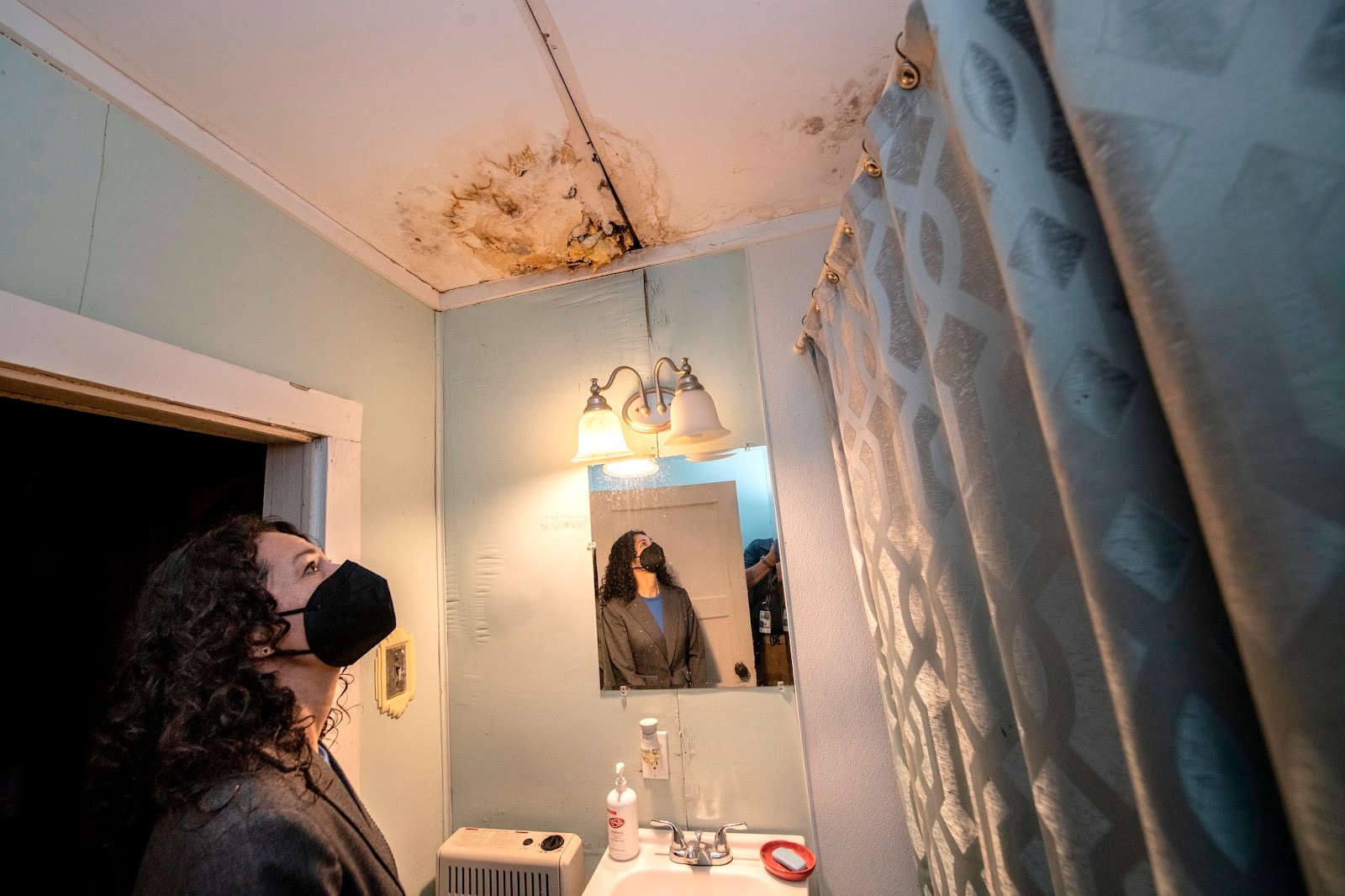
A person wearing a mask looks up at a bathroom ceiling with severe water damage and mold. 20220125-RD-LSC-0345 is licensed in the Public Domain by the U.S. Department of Agriculture.

As housing costs rise, there are far fewer options that renters, and especially low-income households, can afford. Additionally, most renters want to avoid moving so they can remain close to their jobs or their children’s schools, or simply live in a neighborhood they value. A new study by Steven Schmidt highlights the poor housing conditions and maintenance struggles many renters endure to avoid moving or being displaced.

Schmidt interviewed 131 low- and middle-income renter households in Los Angeles. In these interviews, Schmidt learned that low-income renters commonly endure conditions of disrepair, such as mold, leaking ceilings, or lack of heating, just to stay in their homes. These renters had to make difficult or even agonizing decisions when their landlords failed to fix the issues.

While renters have the right to report maintenance delays, this does not come without risk. The renters interviewed often feared that their landlord might retaliate by increasing rent, evicting them, or withholding future repairs. Even when they knew they could notify city authorities about the neglect, some renters did not report it, fearing harassment if the landlords found out.

Even in cases where units finally did get repaired, the repairs were sometimes inadequate. For example, some landlords would paint over the discoloration caused by a leak without actually fixing the cause of the leak. Faced with these conditions, renters sometimes relied on their own resources, paying out of pocket or trying to repair the damages themselves. This caused further mental and financial stress, particularly for low-income households.

These trade-offs show how different conditions in the rental market can widen inequalities between low-income and middle-income renters. Families that can’t afford to move often have to endure unsafe and stressful housing conditions, which threatens their health and safety and can be more expensive in the long run. To better support the health and housing security of tenants, the author recommends some key policy interventions, including targeting landlords’ retaliatory practices and creating stronger regulations for housing safety.

————–

Luna Iman is an interdisciplinary researcher with experience in the field of architecture, built environment, and urban planning. Originally from Jakarta, Indonesia, growing up in the largest urban metropolitan area in South East Asia led to her interest in the dynamics of urban sociology and policy. Her specific research interests are broadly in urban sociology, and more specifically on urban informality, housing policy and justice, population and migration studies.

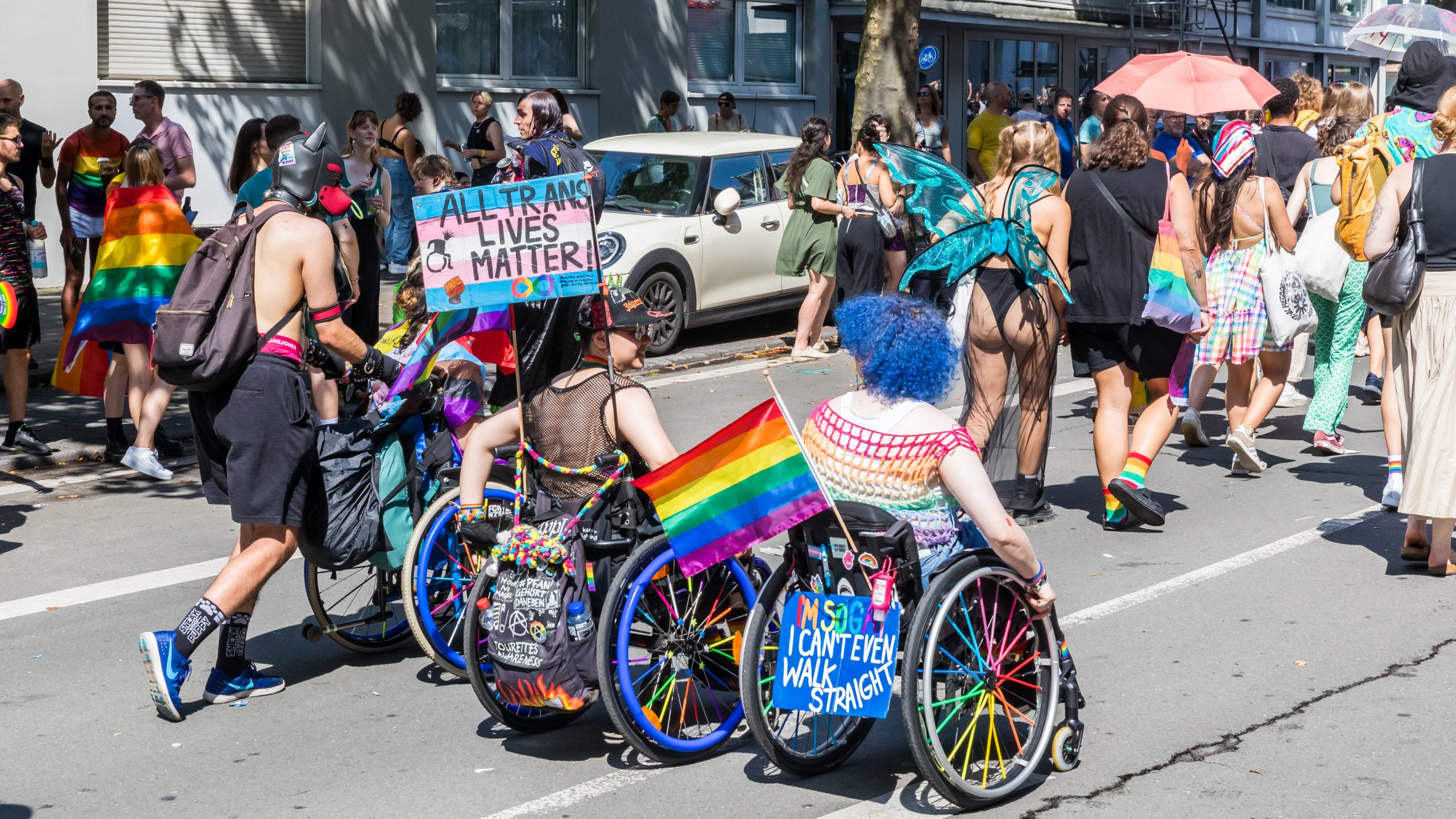
A street scene of a pride parade, featuring three people in wheelchairs with rainbow-colored spokes, gay and trans pride flags, and signs. “2024 ColognePride, Parade-10165” by Raimond Spekking is licensed under the Creative Commons license CC BY-SA 4.0.

Increasing numbers of Americans identify as transgender in spite of the social and political pressures that enforce a gender binary. While knowledge and understanding of transgender people has grown over the past few decades, identifying as transgender still exposes people to stigma, discrimination, and violence. Varying from societal expectations about gender carries significant social risks. In a new study, Aven Peters explores an important factor that might impact people’s choices to defy gender norms anyway: having a physical disability.

Peters analyzes data from three large surveys of adults in the U.S. to explore how having a physical disability impacts people’s likelihood of identifying as transgender. They find a strong relationship: people who have a physical disability are significantly more likely to identify as transgender than people without disabilities. This was especially true among younger generations. In one of the surveys, for example, people born in 1980 were about twice as likely to identify as transgender if they had a physical disability, while people born in 2000 were over three times as likely to identify as transgender if they had a disability. The other surveys showed similar results.

Peters argues that this pattern exists because disabled bodies are already viewed as abnormal and “disorderly” by society, which may make it easier for people with disabilities to depart from binary gender categories. For people who are not physically disabled, identifying as transgender could threaten their status as someone with a “normal” body, which introduces new social risks. For people with physical disabilities who are already viewed as having “abnormal” bodies, the added risks of identifying as transgender may feel lower.

This research highlights how people’s identities are shaped by their own bodily experiences as well as the intersecting power structures of the society around them. People who are marginalized for their disabilities may feel freer to subvert the social forces upholding the gender binary, too.

————–

Anastasia Dulle (she/her) is a PhD student in the Department of Sociology at the University of Minnesota. Her research interests revolve around religion, culture, politics, and rhetorical/narrative studies.

A close-up photo of a gavel as a judge signs a document in the background. “Judge Signing on the Papers” by Katrin Bolovtsova is licensed under CC BY 2.0 in pexels.

As U.S. states pass increasingly strict abortion laws, debates often focus on legal rights and restrictions. But what other messages are these laws sending about gender and power? To explore this question, researchers Luna J. Slater, Brooke A. de Heer, and Emily M. Schneider analyzed the language of 18 of the most restrictive state abortion bans enacted between 2018 and 2022. Their findings reveal how these laws portray abortion seekers as victims, prioritize physical health over mental health, and create bureaucratic hurdles for pregnant people who’ve experienced sexual violence – ultimately reinforcing unequal power dynamics and diminishing women’s autonomy.

Of the laws analyzed, most bans avoid criminalizing people seeking abortions and instead outline punishments for doctors and clinics. The authors argue that this enforces a narrative of abortion seekers as coerced or incapable of making independent medical decisions. Many of these bans also describe abortion procedures as being performed on the pregnant person, rather than as choices made by them. For example, Missouri’s HB 126 (2019) describes the pregnant person as the “woman upon whom an abortion is performed or induced.” The authors argue that such wording ultimately portrays women as innocent, subordinate, and passive recipients of care rather than decision-makers.

While all analyzed bans include exceptions to save the pregnant person’s life, nearly every state limits them to physical conditions, not psychological ones. The authors argue this reinforces the view of pregnant people as vessels for birth rather than individuals whose overall well-being – including mental health – matters. This approach further diminishes the autonomy and rights of pregnant individuals by restricting their access to care based on a narrow definition of medical necessity.

Fewer than half of the bans analyzed included exceptions for cases of rape and incest. Of those that did, 75% required the pregnant person to formally report the rape to law enforcement or a medical provider to qualify. Some laws went even further – such as Iowa’s SF 359, which demands that the rape be reported “within forty-five days of the incident.” These legal conditions place an additional burden on pregnant people who have experienced sexual violence, forcing them to navigate complex bureaucratic and legal systems to justify their need for reproductive healthcare. In doing so, such laws reinforce patriarchal control by limiting reproductive rights and forcing pregnant people to engage with systems that may disregard their safety, dignity, and well-being.

The restrictive abortion laws analyzed in this study go beyond policy – they shape public perceptions of autonomy, health, and justice. By framing abortion seekers as victims, excluding mental health considerations, and imposing burdensome requirements on those who have experienced rape or incest, these laws reinforce gendered inequalities that extend far beyond the issue of abortion.

Mario L. Small, Kristina Brant, and Maleah Fekete, “The Avoidance of Strong Ties,” American Sociological Review, 2024
“Close-up of Frayed Rope on Green Background” by Barnabas Sani is licensed under CC BY 2.0 in pexels.

It’s common to assume that a primary value of close friends and family, also known as our “strong ties,” is the ability to confide in them, making our closest relationships the natural outlet for discussing personal difficulties. However, in their 2024 article, Mario Small, Kristina Brant, and Maleah Fekete challenge this idealized view. They ask a fundamental question that reshapes our understanding of social networks: How common is it for people to avoid the very people they are closest to when facing personal issues? The answer suggests that the most isolated people in society might be those who feel compelled to avoid their closest confidants.

Small et al. used a nationally representative survey of U.S. adults collected in 2019. Respondents were asked to name up to seven people they felt close to and then report whether they talked to, or avoided talking to, each person about specific recent personal issues. This approach allowed the authors to capture avoidance not merely as silence, but as a patterned social process.

A fascinating distinction the study makes is between “passive” and “active” avoidance. Passive avoidance, which makes up a large portion of the avoidance reported, occurs when a person never even considers a close tie as someone they could talk to about a particular issue. Active avoidance, on the other hand, happens when someone considers sharing their problem but deliberately decides to hold back. 

The researchers found that avoidance is very common even among strong ties. Contrary to the expectation that intimacy naturally produces openness, Americans are just as likely to avoid a given close friend or family member as they are to talk to them when facing personal issues. The study also found that avoidance is not limited to “difficult” relatives or specific taboo topics like politics or sex, but is widespread and situational. It depends largely on the specific combination of the person and the topic, meaning a person might avoid their mother regarding a career failure but confide in her about a relationship issue, while doing the reverse with a best friend.

Beyond individual relationships, Small and colleagues argue that avoidance is shaped by the broader structure of our social circles, including group density and power dynamics. In tighter-knit friend groups, people may experience slightly less avoidance, possibly because collective support reduces the risks of opening up. At the same time, power imbalances such as fearing backlash from an influential, controlling, or higher-status family member can intensify avoidance in ways that looking at a simple one-on-one relationship fails to capture. These findings point to avoidance as a group-level phenomenon, not just a matter of personal preference or an interpersonal mismatch.

Small, Brant, and Fekete’s research challenges the traditional definition of a “strong tie” as a high-trust social connection. Their findings suggest that our closest relationships are characterized by avoidance as well as trust – and that navigating close relationships involves a constant, fundamental need to both conceal and reveal.

“Man and Woman Happily looking at each other” by Mike Jones is licensed under CC BY 2.0 in pexels.

In a society seeking unity and multiculturalism, interracial relationships are typically viewed as a sign of progress. However, interracial couples in the United States often face the pressure of societal tensions rooted deep in a history of racism and the enslavement of Black people. These past tensions have evoked a sense of wariness for challenging racial boundaries, especially when it comes to romantic relationships. A new study shows that Black women in relationships with white men experience these pressures in a variety of ways, and often from members of the Black community. 

In 2021, Vanessa Gonlin and colleagues interviewed 82 Black American women with higher-than-average education levels about their experiences dating or marrying white men. Responses revealed that Black women in such relationships were often met with suspicion and even rejection from other Black people for stepping outside of racial boundaries.

As one interviewee described, “Because I am a Black woman, I’m not allowed to be attracted to light-skinned men or to white men, … because then that’s me trying to be whiter, escape my Blackness or escape trying to be Black … so you internalize on these comments.”

Many women described experiencing identity invalidations and alienation as a result. Some talked about being accused of internalized racism, or of encountering barriers to getting involved in the Black community. Still other interviewees expressed frustration with other people’s perceptions of them, while some even felt a sense of guilt.

This research draws attention to the consequences Black women face for deviating from normative expectations. As a result of these consequences, many Black women in interracial relationships struggled to achieve a sense of balance between their connections with their community and their personal connection to their partner.

“Clsoe-up of a Reel-to-reel Audio Tape Recorder” by cottonbro studio is licensed under CC BY 2.0 in pexels.

Serial killers like Ted Bundy and Jeffrey Dahmer have been gone for decades, yet their stories continue to fill our screens and airwaves. From Netflix series and documentaries to true crime podcasts, their names and crimes keep reappearing in new forms. A new study by sociologist Brian Monahan explores why these stories never seem to fade. He argues that their endurance is not just the result of public fascination with violence, but of the media’s ongoing effort to reproduce, repackage, and resell them.

Monahan introduces the concept of “media looping” to explain this process. Drawing on 37 media examples, including documentaries, films, streaming series, and podcasts, he finds that stories about serial killers are continually reactivated and reshaped. From early sensationalist documentaries in the 1980s to recent prestige dramas like Dahmer — Monster: The Jeffrey Dahmer Story (2022), the same figures and themes are reinterpreted for new audiences. The repetition makes old crimes feel current and turns historical events into ongoing cultural touchstones.

The study shows that this process is not accidental. Media looping is both a storytelling pattern and a business strategy. It allows media companies to reuse familiar stories and recognizable figures to keep audiences engaged and generate profit.

But this repetition also affects how people understand violence. Monahan finds that white male killers are often shown as complex or even sympathetic, while victims, many of whom are women or people of color, receive much less attention. This imbalance shifts the focus away from the victims and the social conditions that shape their stories. Viewers also become part of the cycle by listening to true crime podcasts, watching series, and joining online discussions that keep these stories circulating and alive.

Monahan’s research suggests that serial killer stories persist not only because they are newsworthy or extraordinary, but because repetition itself is what makes them extraordinary. Media industries depend on retelling violence in ways that generate new interest and revenue, turning real tragedies into lasting cultural products. In the end, the timeless serial killer is less a mystery of human psychology and more a reflection of how our media systems recycle familiar stories to hold our attention.

A young girl holds the hand of an adult. “together” by Spirit-Fire is licensed under CC BY 2.0.

Parenting styles shape the way children gain important knowledge and resources in key developmental years. New research is showing how these parenting styles are influenced by even short-term fluctuations in family income. 

Gabriele Mari explored how unexpected increases and decreases in income influenced parenting styles in high- and low-income families in the United Kingdom. Using data from the UK­ Household­ Longitudinal­ Study from 2009-2022, Mari assessed how income swings placed strain on parents, shaping levels of warmth, harshness, and permissiveness in parenting. 

Mari found that high- and low-income parents react differently to income shifts. Although low-income parents showed less warmth than high-income parents generally, low-income parents were more likely to score higher on warmth scales during periods of income uncertainty.  Mari reasons that this ability of low-income parents to show warmth despite income shifts could be an adaptation to persistent economic disadvantage. In contrast, high-income parents scored higher on both harshness and permissiveness during periods of instability.

Mothers and fathers also responded differently to income uncertainty. Mothers were less likely than fathers to change parenting styles during periods of economic instability. This finding supports the theory of “inventive mothering,” which describes how mothers shield children from the effects of economic uncertainty by maintaining typical parenting strategies. In line with Mari’s other findings, high-income fathers responded to earned income losses with lower warmth, while low-income fathers showed greater warmth.

Mari’s research highlights how parents respond to and buffer the effects of income uncertainty.  It is important to know that instability in income can undermine stability in parenting, especially as workers in the United States and elsewhere face temporary or gig employment, volatile earnings, and diminishing benefits packages.

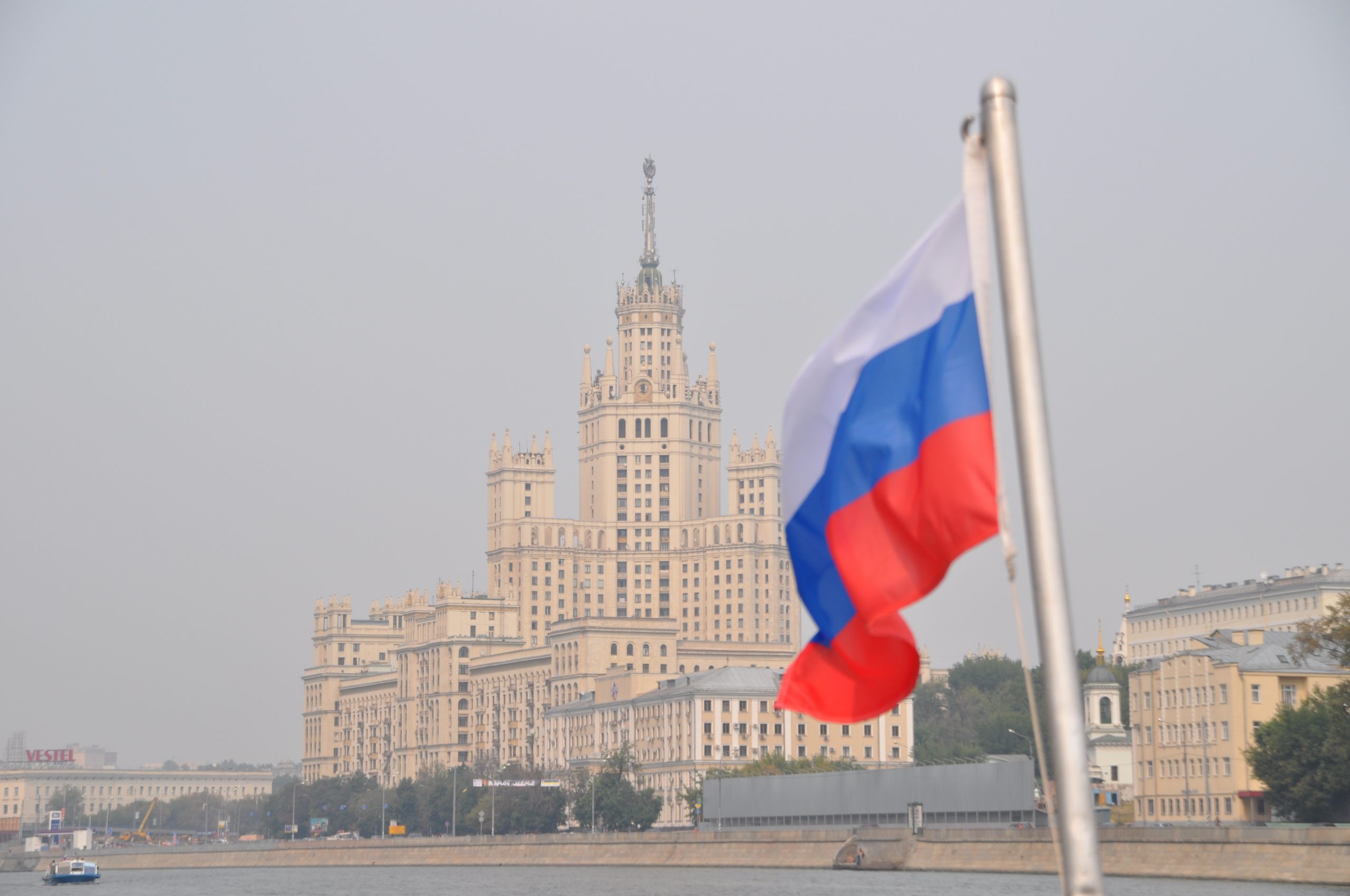
A Russian flag flaps in the wind, with a large stately building visible in the background. “Russland-Flagge-Moskau” by Schlurcher is licensed under the Creative Commons Attribution 4.0 International license.

Since the Russian invasion of Ukraine in 2022 and the subsequent military draft, as many as a million Russians have fled their country. Many of these migrants (who are typically younger, more liberal, wealthier, and more educated) have emigrated to nearby countries to escape the war and Russia’s increasingly authoritarian regime. In 2023, researcher Liudmila Listrovaya interviewed 20 Russians who had fled to the Republic of Georgia. Her findings reflect broader tensions in how people navigate deep opposition to their own country’s government alongside a continued love for its people.

Listrovaya found that many interviewees held ambivalent and complicated feelings about the lives they had left behind. All interviewees expressed their love and longing for Russia, and all but one strongly opposed the war and the current government. As one man described, “I love my country, but I hate the state… I miss Russia very much… At the same time I clearly understand that if I return, my taxes will be sponsoring the war.”

Multiple interviewees also expressed feeling shame for leaving behind relatives who were elderly or had health issues. Simultaneously, however, many people had sharp political conflicts with family members who still lived in Russia. Many interviewees managed these relationships by intentionally avoiding political topics. As one man stated, “if we all bring up the topic of war, there will be arguments, and 100% there will be a conflict. … I just simply don’t start these conversations.”

Almost all of the people interviewed were entirely disengaged from political action, including those who had been highly politically active before leaving Russia. Even after moving to Georgia, many emigrants expressed anxiety over the potential of the Russian regime retaliating against them. All but one interviewee avoided posting anything political on social media due to the threat of legal or physical punishment.

Many emigrants expressed disillusionment with the idea that protesting could cause any positive change. One woman described, “Maybe our protest is our departure? … The escape was the only available protest. You can’t write anything on the internet – you return back and they roll you up. Going to protests is useless and physically dangerous.”

At a basic level, these findings highlight how authoritarianism can impact people’s perceptions of their nation, the government, and their own political actions. In fact, most interviewees were entirely disengaged from politics and disillusioned from the hope that anything in Russia might change for the better. More generally, this study reminds us of the deeply complicated feelings many people around the world hold toward their countries today, holding both a love for the people and opposition to the government simultaneously. 

A photo of a banner that reads “system change not climate change.” “Close-up of a climate change protest banner. ‘System change, not climate change’” by Ivan Radic is licensed under CC BY 2.0.

What drives people to take action on climate change? Obviously, concern about climate change matters, but people also have to believe their actions can make a difference. This is true for everyday actions (like recycling, avoiding driving, or buying environmentally sustainable products) and for political actions (such as signing a petition, donating to climate NGOs, or joining a protest). Recent research suggests that people’s perceptions of both the timing of climate change and the concern of those around them also play an important role.

Using survey data from Germany, Ioana Sendroiu and colleagues explored how people’s perceptions about the timing and inevitability of climate change are directly connected with their likelihood of taking action. They found that those who believe the “tipping point” when climate change becomes irreversible is either in the near future or the recent past have a higher tendency to participate in climate action than others. People who think the tipping point lies far away in the future, or that we are well past the tipping point, are less motivated to take action.

The researchers found that people’s beliefs about how others perceive climate change also matter. For people to participate in climate action, they need to think that people around them are concerned enough about climate change that they would also take action – especially for events that require mass participation, like signing petitions or joining protests. However, if people believe others are very concerned about climate change, their own motivation for taking action decreases.

This study shows that just believing climate change is real isn’t enough to motivate people to take action against it. People also need to believe their actions will matter. How people think about the timing of climate change, and how concerned they think others are, are part of this.